Sunday, 29 June 2008

TOWARDS AN ANTHROPOLOGICAL DEFINITION OF RELIGION


Question

Should a religion be defined according to belief, ritual or their lived experience in everyday life?

Answer

TOWARDS AN ANTHROPOLOGICAL DEFINITION OF RELIGION

A. Introduction

Religion has already for a long period been a topic of anthropological study. It is Sir Edward Burnett Tylor (1832 - 1917), who is considered as the founding father of the anthropological study of religion. He saw religion as a way to understand the unexplainable (Stanley Tambiah 1990: 43). Nowadays the phenomena religion is seen as a cultural universal. But the concept religion certainly is not. In the nineteenth century French encyclopedias introduced the concept, that etymological can be traced back to the Latin `religare´, meaning to tie back. The anthropologists, in contrast with for instance theologians, do not ask whether there is divine truth in religion, but looks at the content of the religion. The view on religion is very well typified by the definitions used for the concept. Max Weber refused to define religion and didn’t take religion seriously (Bryan Turner 1974: 177) and that might indeed be the wisest thing to do. But I will take some anthropological definitions.

B. Definitions of Religion

In classical anthropology the definitions tend to focus on religion in `traditional´ societies. In this they put emphasis on the interaction with supernatural entities[1] Although subject of debate, religion in my view is very well possible without any supernatural beings, as Durkheim has debated in the case of Buddhism. The most important point of Durkheim is that religion can be seen as something sacred or as he puts it:

a unified set of beliefs and practices relative to sacred things, that is to say, things set apart and forbidden, - beliefs and practices which unite [into] one single moral community, all those who adhere to them(Durkheim 1995: xxxiv)[2] In Durkheim’s view, it is the authority and beliefs of a society that make things sacred or nonsacred (in his terminology, profane). Religion is consequently best understood neither as the result of supernatural revelation (although Durkheim recognizes that this may be a personal view held by the member of a religion), nor as an illusion or set of mistaken ideas (which might be the viewpoint of a skeptical outsider who does not accept the religious beliefs). Rather, religion is best understood as the power of a society to make things sacred or profane in the lives of its individual members. According to Durkheim, the social and religious power of sacredness are one and the same, since to hold something sacred is to demonstrate one’s commitment to and respect for the authority of one’s tradition.

What also is worth noting is that he takes religion as being both believe and practice. Furthermore Durkheim sees religion specific as something collective, while magic would be typified by individual practice. With his emphasis on a community as the basis of religion, that what often is referred to as shamanism would for instance not be considered a religion.

Another definition is by Sir Edward Taylor[3] He defines religion as “the belief in Spiritual Being”. Taylor’s treatment of religion is remarkably different from Robertson Smith’s sociological treatment of it in religion of the semites (1899). Smith sees totemism as the earliest manifestation of religion, in which the religion of the group or clan dominates individuals, and in which rite precedes belief, Taylor’s conception of religion put belief before rite, and saw its original basis in individual psychology. And from these basic premises he built up his scheme in evolutionary terms. Thus lower natural religion was transformed into higher revealed religion, distinguished by morality and ethics.

Taylor systematically built up other progressions: from the belief in souls to belief in spirit after death. By means of these progressions tylor constructed his (hypothetical) developmental scheme from animism to polytheism to monotheism, the last being the highest form.

Another definition is by Clifford Geertz. He defines religion as

(1) a system of symbols which acts to (2) establish powerful, pervasive, and long-lasting moods and motivations in men by (3) formulating conceptions of a general order of existence and (4) clothing these conceptions with such an aura of factuality that (5) the moods and motivations seem uniquely realistic (Geertz 1985: 4).[4] A little remark I can not keep to myself is that implicitly Geertz suggest that the religious experience is not true (an aura of factuality, it seems to be realistic), while in my view anthropologists shouldn't do any pronouncement about its truth, but need to be able to see it as the truth of the people studied. Like Durkheim who states: All [religions] are true in their own fashion. It is the task of the anthropologist to understand these fashions. As a critical point to Geertz´ definition that it lacks specificity. It wouldn't contain a directly observable, formal characteristic which is universally applicable as a means of identifying the religious. So it doesn't leave the anthropologist much to study, as I would interpret it. Hereafter they define religion themselves as:

All explicit and implicit notions and ideas, accepted as true, which relate to a reality which cannot be verified empirically (van Baal & van Beek 1985: 3)[5] So I must have misinterpreted their critics because here Geertz' symbols, moods, motivations and conceptions have been reduced to only notions and ideas. But there is also a similarity between the two definitions. In contrast with Durkheim and Tylor, both Geertz and van Baal & van Beek take non-empirically perceivable objects (notions and ideas; a system) as the core of religion instead of also having an eye for the practice. To me it seems to be this aspect can not be lacking in a definition, especially one of social scientists. Not only what is believed but also what is done marks the difference between religions. Some people might refer to their religion as mainly being the actions they are taking while others might emphasis the beliefs. So a definition should at least leave it open whether believe or action is taken as the core of the religion. In my point of view an anthropological definition of phenomena should somehow give a handle.

In other hand, Malinowski sharply separated off science from religion. Science was a “profane” activity, while religion grouped with magic belonged to the “sacred” domain. (Staley Tambiah 1990: 67)

This demarcation is basically opposed to Taylor’s scheme, which grouped magic with science as “pseudo-science”. Malinowski characterization of “science” was both simpliciticand generous when he actually credited the Trobianders with the possession of scientific knowledge (Stanley Tambiah 1990:67-68).

C. Conclusion

Above this a definition in my point of view should embrace the dimensions in which religion is expressed. A lot of times it is these dimensions that are referred to as religion. Further essential to me seems the relation with something spiritual, in the broadest sense, being a quality of a human individual or an entity on its own. So summing up a definition in the line of the given arguments should have eye for the cognitive as well as the per formative nature of religion. It should somehow incorporate the dimensions in which it is expressed and take awareness of the fact that it has something to do with the spiritual. With these ingredients one comes to something like:

A set of beliefs and/or actions to regulate and approach reality, expressed in: (a) doctrine, (b) philosophy, (c) myth, (d) symbol (e) ethic, (f) ritual, (g) matter, (h) experience and (i) social organization, in some way related to spiritual qualities, phenomena or entities.

In my point of view, to accentuate a point made before, religion is not something that can be studied, at least not by social scientist. It can only see expressions of religion, or to be more precise - but maybe a little confusing - the way it sees a human expression as the expression of what she refers to as religion. So only the expressions, of which certainly a limited number are included in the definition, can be studied. The point of it refers to as religion is that sometimes, because religion is not empirically perceptible, it is not clear whether an expression is religious. The field of ethics can supply us with a good example of this. The Moslems are forbidden to talk about bad things occurring in the Holy Book. One could look at this as a religious ethic: you should not talk about the bad things, but in the way described it maybe has more significance to look at it as socio-political ethic. For the sake of the Qur’an as a Source, there should be given a good image to the outside world, and there doesn't seem to be much religious about that.

This example shows that religion is very much intermingled with secular life. Religion is next to striving for spiritual goals also used for all kind of worldly goals. "Elementary" forms of religion are focused on mundane, worldly concerns: health, rainmaking, prosperity or as Weber puts it: "religious or magical behaviour or thinking must not be set apart from the range of everyday purposive conduct, particularly since even the ends of religious and magical acts are predominantly economic" (Sociology of religion 1965: 1)

[1] Guido Verboom, 2006, Religion, http://mongoluls.net/mongolian-religion/religiondef.shtml

[2] Emile Durkheim,1995, The Elementary Forms of Religious life, translator’s introduction, (trans.) Karen Field

[3] Stanley Tambiah, 1990, Religion, Magic, Science and the Scope of Nationality, p: 47-48

[4] Geertz, C.1985. Religion as a cultural system. Anthropological approaches to the study of religion. M. Banton. London, Tavistock: XLIII, 176. Cited in Guido Verboom, op. cit.

[5] Baal, J. v. and W. E. A. v. Beek, 1985. Symbols for communication an introduction to the anthropological study of religion. Cited in Guido Verboom, op. cit.

DEDUCTION


Deduction is the process of figuring things out that are necessary true, provided that the assumption we start with, called the premises, are true. Geometry is based on deductive thinking. So are all those word problems you had to do in math class.

Aristotle provided a famous example of a kind of deduction that he called a syllogism. It consists of three statements: two premises and a conclusion.

Here is Aristotle’s syllogism about Socrates:

All men are mortal

Socrates is a man

Socrates is mortal

From the two premises, we can deduce the conclusion for certain.

As Aristotle himself noticed, the conclusion is only certain if the premises in fact true. If all men aren’t mortal, or if Socrates is not a man, then the conclusion that Socrates is mortal may be false.

As you’ll see later in chapter 7, Aristotle developed a whole philosophical system –including epistemology, metaphysics, and ethics- largely with the help of syllogism that assured him that his ideas were logically consistent. And, for the most part, his ideas are logically consistent. Unfortunately, this doesn’t make them all true. Many of Aristotle’s premises can be shown to be false.

Even so, Aristotle’s thinking has been extremely influential; partly because he has helped other philosophers focus on the logical consistency of their ideas. Deduction is the best way to expand what we already know. If we can be sure of our premises and the meaning of the words we use, it leads to reliable information.

INDUCTION

Another important logical process is induction –a way of making generalizations about things-. Induction, like deduction, moves from premises to conclusions. But unlike deduction, induction leads to conclusions that may not be true even if the premises are true. Inductive conclusions are only probable, not certain.

For example, if we want to know what color crows can be and we go out and find a good number of crows and all of them are black; it’s a pretty good bet that all crows are black. But can we be sure? Even seeing a million black crows doesn’t mean for certain that there isn’t a crow out there somewhere that is lime green. The best we can do is say that all crows are probably black.

Induction is, in some ways, less certain than deduction, but induction can do a lot that deduction can’t. Induction for example, can help generate hypotheses. A hypothesis is a generalization that we think might be true, but that might not actually be true.

Thursday, 19 June 2008

KEBANGKITAN NASIONAL (SEABAD KONTROVERSI SEJARAH DI INDONESIA)


Sejarah merupakah sebuah fenomena peradaban manusia yang unik, dengan adanya sejarah kita bisa menguak tabir masa lalu, namun sejarah juga bisa melahirkan kontroversi dan perdebatan panjang.

Pada dasarnya, sejarah merupakan suatu kejadian atau peristiwa yang benar terjadi, bersifat mutlak. Namun, kemudian ia akan menjadi relatif bila dilihat dari berbagai sisi dan sudut pandang. Singkatnya, kejadian itu sendiri bersifat absolut, tapi setelah ditangkap dan sampai pada manusia kejadian itu kemudian menjadi relatif. Dengan demikian, kebenaran sejarah merupakan kebenaran relatif. Hal inilah yang kemudian melahirkan beragam perdebatan dan kontroversi. Sejarah konvensional yang menjadi pegangan umum harus rela untuk direkonstruksi begitu ditemukan bukti baru. Maka tidak heran hingga detik ini telah muncul banyak versi sejarah. Sejarah bukanlah fenomena yang hanya mengakui hitam-putih, panjang-pendek, banyak warna dan ukuran yang menghiasinya. Namun, selama tidak mengandung bias dan tidak untuk kepentingan kekuasaan, versi-versi sejarah tetap memberikan nilai yang berarti.

Namun pada galibnya, Sejarah dijadikan doktrinasi dalam legitimasi politik pemerintah, yang mengakitbatkan penyelewengan fakta. Sejarah menjadi milik penguasa, dinasti atau orde yang berkuasa.

Hal inipun terjadi di negara kita. Telah terjadi pembengkokan sejarah dan pengaburan fakta. Setelah reformasi bergulir, puluhan buku yang mempertanyakan dengan berani dan terbuka merupakan bukti riil. Sejarah yang sudah ada dianggap tidak benar dan tidak sesuai dengan fakta dan bukti sejarah. Sumbernya dipalsukan dan interpretasinyapun bias. Sejak saat itu pula sejarah harus diluruskan, sebab pemalsuan sumber sejarah merupakan pembengkokan atau rekayasa sejarah.

Selama ini publik bingung dengan banyaknya peristiwa masa lalu yang kabur atau dikaburkan sebab ditampilkan sesuai kehendak politik. Kini semenjak lengsernya rezim orde baru, sejarah Indonesia tidak lagi menjadi dominasi pemahaman rezim, namun menjadi kontroversi sengit dikalangan para sejarawan dan peneliti.

Menurut Asvi Warman Adam (2007), kontroversi sejarah di Indonesia dikarenakan fakta dan interpretasi yang dilakukan pemerintah berkuasa tidak tepat, tidak lengkap dan tidak jelas. Akibatnya, begitu rezim otoriter itu tumbang, sejarah yang direkonstruksinya pun tumbang. Maka, terjadilah polemik dan kontroversi sejarah di tengah masyarakat.

Masih menurut Asvi, peristiwa masa lalu yang masuk dalam kategori pertama, misalnya, Peristiwa 30 September 1965. Peristiwa tersebut masuk dalam kategori pertama karena Partai Komunis Indonesia (PKI) menyatu dengan Gerakan 30 September, G 30S/PKI, seakan partai tersebut adalah dalang tunggal di balik percobaan kudeta 1965, padahal ada versi lain tentang keterlibatan militer, Soekarno, Soeharto, bahkan unsur asing (CIA dan lain-lain). Bahkan, belakang ada yang melihat peristiwa dari 30 September 1965 sampai 11 Maret 1966 sebagai suatu kesatuan dan disebut "kudeta merangkak". Karena itu Asvi menyatakan bahwa penggunakan istilah Gerakan 30 September lebih obyektif daripada yang lain (Gestok, Gestapu, G 30 S/PKI).(Koran Tempo, 1/04/2007).

Yang masuk kategori kedua, misalnya, tentang Budi Oetomo yang kelahirannya, 20 Mei 1908, diperingati sebagai Hari Kebangkitan Nasional. Terdapat kritik terhadap organisasi ini yang dinilai bersifat kedaerahan. Sedangkan Sarekat Islam yang berdiri pada 1905 lebih nasionalis walau namanya sendiri berunsur agama. Asvi berpendapat bahwa peringatan tersebut dapat dilakukan, namun dengan mengenang dan mempersandingkan kedua organisasi perintis tersebut. Termasuk dalam kategori ini adalah kisah hidup para pahlawan yang selama ini dikesankan sebagai manusia tanpa cacat, atau pahlawan yang sengaja tidak dikenang, dibuang dari gelanggang sejarah.

Sedangkan kategori ketiga adalah hal-hal yang tidak jelas dalam sejarah Indonesia, misalnya naskah asli Supersemar. Sampai saat ini naskah asli surat itu tidak jelas keberadaannya, oleh karena itu dapat dipertanyakan apakah Supersemar itu benar ada atau tidak.

Maka dari itu, peristiwa yang masih samar tersebut perlu dikaji secara mendalam dan komprehensif guna menempatkan sejarah pada posisi sebenarnya. Masa lampau memang sudah berlalu, namun ia tak mati, rohnya tetap hidup dan berhubungan dengan masa sekarang dan masa depan. Karena itu, sepakat dengan Hasan Hanafi (2000), bahwa rekonstruksi masa lampau akan tetap diperlukan guna memetakan masa depan. Sejarah mengandung kebijakan (wisdom) dan kebajikan (virtue) untuk dijadikan pedoman, penilaian, agar manusia bertindak lebih baik dalam memetakan masa depan.

Dalam artikel singkat dan sederhana ini penulis tidak akan mengkaji berbagai peristiwa di atas, namun akan berkonsentrasi pada pembahasan kontroversi momen kebangkitan nasional yang masih menjadi bahan perdebatan dikalangan akademisi maupun masyarakat luas hingga kini. Tepatkah 20 mei menjadi patokan dasar harkitnas? Kira-kira demikianlah pertanyaan yang akan dijawab dalam artikel ini.

KONTROVERSI DAN PERDEBATAN TIADA HENTI

Sebuah kebangkitan bermula disertai dengan parameter dan fakta sejarah yang digunakan. Menurut Syafi’i Ma’arif (Republika, 06/04/2008) Kebangkitan nasional harus diartikan sebagai kebangkitan Indonesia sebagai bangsa, bukan kebangkitan suku-suku bangsa. kelahiran Budi Utomo (BU) pada 20 Mei 1908 adalah sebuah terobosan kultural-intelektual yang sangat penting bagi sebuah suku yang kebetulan berjumlah mayoritas dibandingkan dengan suku-suku lain, yaitu suku Jawa, yang sekarang meliputi Provinsi Jawa Tengah dan Jawa Timur. Jasa tokoh-tokoh seperti Dr Wahidin Soedirohoesodo dan Dr Soetomo dengan gagasan pencerahannya bagi suku Jawa (saat itu disebut bangsa Jawa), tentu punya makna tersendiri.

Ketetapan politik untuk sebuah peristiwa penting tanpa dasar sejarah yang solid, posisinya tentu tidak lebih dari mitologi, rapuh sekali. Dalam Anggaran Dasar BU, ditetapkan di Yogyakarta 9 Oktober 1908, pasal dua berbunyi: "Tujuan organisasi untuk menggalang kerja sama guna memajukan tanah dan bangsa Jawa dan Madura secara harmonis." Tetapi, juga harus dikatakan bahwa sebelum tahun 1920-an, selain Sarekat Islam (SI) dan BU memang tidak ada organisasi manapun di nusantara yang sudah menggagas tentang kemungkinan munculnya sebuah bangsa yang kemudian bernama Indonesia yang tegas dengan watak nasionalnya. Apalagi pada abad ke-19, sosok bangsa Indonesia dalam mimpi pun tidak terbayang oleh masyarakat kala itu. Maka, akan sangat bijak jika pemerintah dan masyarakat kita sekarang mau mengkaji ulang keputusan politik tahun 1948 (awal peringatan harkitnas) yang menetapkan kelahiran BU, 20 Mei 1908, sebagai tonggak kebangkitan nasional.

Mengenai kontroversi ini sejarawan Rushdy Hussein menegaskan, munculnya momen kebangkitan nasional pada tahun 1948 atas usul Ki Hajar Dewantoro dipicu dari keadaan politik Indonesia yang belum stabil sebagai negara yang baru lahir. Pertikaian antar partai politik kala itu semakin menambah suramnya masa depan bangsa. Maka pemerintah memutuskan untuk menjadikan 20 mei sebagai hari kebangkitan nasional. Dengan harapan pertikaian antar partai kala itu bisa teredam dengan momen tersebut. Kepanitiaanpun dibentuk dengan keanggotaan yang multi partai.[1] Namun ada hal yang dilupakan dalam peristiwa tersebut, tambah Hussein. Presiden Soekarno pada tahun 1948 dalam pidatonya satu machtspolitiek (Politik Kekuasaan) sudah mengimbau agar tanggal tersebut kelak ditinjau kembali.[2] Jadi, 20 Mei belum tentu tepat sebagai lambang kebangkitan nasional. Dan rupa-rupanya kita lupa, sampai hari ini tetap saja secara tradisional menggunakan lahirnya BU sebagai tonggak kebangkitan nasional tanpa mengetahui sejarah kelahirannya.

Fakta sejarah juga membuktikan bahwa BU tidak bertahan lama, karena bubar pada tahun 1935. Disamping keanggotaannya yang feodalistik dan a-nasionalis sehingga kuantitas anggotanya kalah jauh dibandingkan dengan SI, BU juga kalah bersaing dengan SI yang berani merambah ranah politik dan dengan lantang menentang kolonialisme. Hal ini yang menurut sebagian sejarawan menjadikan pamor BU tergeser kebelakang yang akhirnya bubar pada tahun 1935, sepuluh tahun sebelum para founding fathers mendeklarasikan kedaulatan Indonesia. Tak heran apabila hal ini memicu perdebatan panjang para praktisi sejarah tentang penetapan BU sebagai landasan awal kebangkitan nasional. Dan menuntut peninjauan ulang tentang hari kebangkitan nasional.

Selain lahirnya BU yang menjadi patokan konvensional kebangkitan nasional, lahirnya SI pada tahun 1905 -tiga tahun lebih awal dari BU- juga merupakan awal dari jiwa nasionalisme dan patriotisme yang tidak hanya mengedepankan otot dan kekuatan dalam melawan kolonialisme, meskipun SI menjadikan sentimen keagaamaan sebagai landasan pergerakannya. Sehingga tidak sedikit dari sejarawan yang berpendapat bahwa 16 oktober –tanggal lahirnya SI- lebih layak menjadi patokan kebangkita nasional.

Ada juga yang menjadikan Kongres Pemuda 28 Oktober 1928 [3] sebagai tonggak awal kebangkitan nasional, salah satunya adalah Syafi’i Ma’arif, dia menegaskan bahwa, memang BU telah berjasa dengan caranya sendiri, tak seorang pun yang dapat menyangkal. Begitu juga gerakan pemuda kedaerahan, seperti Jong Java, Jong Minahasa, Jong Ambon, Jong Batak, Jong Sumateranen Bond, dan Jong Islamieten Bond dalam kapasitasnya masing-masing tentu telah pula berjasa dalam upaya penyadaran dan pencerahan kelompok masing-masing dalam suasana kolonial yang masih mencekam.

Dengan Sumpah Pemuda, semua gerakan kedaerahan ini, sekalipun dengan susah payah, akhirnya meleburkan diri dan bersepakat untuk mendeklarasikan trilogi pernyataan yang tegas-tegas menyebut tumpah darah/tanah, bangsa, dan bahasa Indonesia. Sumpah ini didukung oleh berbagai anak suku bangsa dan golongan. Jadi, cukup repsesentatif bagi awal kelahiran dan kebangkitan sebuah bangsa bernama Indonesia.

PENUTUP

Sebelum abad ke 20 perjuangan rakyat indonesia masih bersifat kedaerahan, bersifat kekuatan fisik tanpa memperhitungkan kekuatan otak. Jadi hanya otot yang dipertaruhkan. Tapi 1905 dan 1908 senang atau tidak senang pergerakan pada waktu itu sudah menggambarkan bahwa otak gerakan etis itu memunculkan satu peristiwa besar, yaitu pendidikan bagi semua orang di Hindia. Tanpa pandang bulu. Dan pendidikan itulah sebetulnya yang menyadarkan orang akan arti sebuah nasionalisme dan kemerdekaan.

Beragam kontroversi tentang manakah yang layak menjadi landasan kebangkitan nasional semakin marak dan terang-terangan, khususnya setelah bergulir era reformasi. Lahirnya BU, SI/SDI atau bahkan Kongres Pemudakah yang harus menjadi tonggak awal kebangkitan? Menurut hemat penulis, perdebatan semacam ini tidak perlu diperpajang, dalam artian, sepanjang fakta dan sumber otentik sejarah telah dituturkan dengan jujur kepada masyarakat. Biarlah masyarakat nantinya yang menilai. Toh, setiap pergerakan yang ada kala itu, SI maupun BU, sama-sama telah memberikan kontribusi signifkan berupa pencerahan akan arti kemerdekaan dan nasionalisme yang lebih elegan, sehingga muncul berbagai organisasi dan partai politik yang beragam hingga kemerdekaan diraih oleh bangsa kita pada tahun 1945.

Terlepas dari kontroversi diatas, yang lebih penting adalah bagaimana kita bisa bangit secara faktual bukan sekedar seremonial. Lima permasalahan besar bangsa ini, yang pernah diutarakan Presiden SBY,[4] krisis ekonomi, ancaman disintegrasi, praktek KKN, terorisme dan intervensi pihak asing perlu dijadikan musuh bersama (common enemy) yang menjadi tanggung jawab bersama, disini -sepakat dengan muladi- rejuvenasi (peremajaan) optimisme bangsa merupakan harga mutlak. Jangan kita berhenti pada perdebatan tiada henti yang semakin menggoyahkan persatuan, tapi mari menuju aspek riil yang membutuhkan uluran tangan bersama. Bersama indonesia bisa!

Allah Knows Best

Albi,190608,14:05

[1] pelaksanaan harkitnas pertama kali diketuai oleh Ki Hajar dewantoro dengan wakil sugito dari PKI, anggotanya pun terdiri dari PNI, Masyumi dan partai lainnya kala itu.

[2] Dalam pidatonya tersebut Bung Karno menggaris bawahi, “andaikata bisa diselenggarakan peringatan kebangkitan nasional ini pada tahun-tahun mendatang, cobalah dievaluasi setiap 10 tahun”. Maksudnya tentu, apakah benar mengambil angka 20 Mei itu, artinya lahirnya Boedi Oetomo itu tepat. Itu yang dia mau bicarakan.

[3] Istilah Kongres Pemuda merupakan istilah yang pertama kali digunakan dalam pertemuan pemuda yang menelurkan trilogi pernyataan semangat nasionalisme yang sekarang lebih di kenal dengan Sumpah Pemuda. Istilah Sumpah pemuda baru digunakan pada tahun 1958 oleh Bung karno. Lihat, Asvi Warman Adam, Seabad Kontroversi Sejarah, Ombak, Yogyakarta, 2007.

[4] Transkip kuliah umum tertanggal 4 September 2007, di Universitas Airlangga-Surabaya. Lihat:www.sekretariatnegara.com. Jumat, 25 April 2008. dikutip dari: Muladi Mughni, Rejuvenasi Aura Optimisme; sebuah Modal bagi kebangkitan Nasional, Naskah LKTI dalam rangka Harkitnas di KBRI Islamabad, 20 mei 2008.

Monday, 26 May 2008

the ethic of plato

'Ethic' is one of the important aspects in human's life, there are many different ideas discusses about ethics, whether it such branch of knowledge or philosophy. However it will be explained here in my project 'The ethics of Plato' and the first chapter is clarifying the different definitions of Ethics among some scholars.

The second chapter will give brief introduction of Plato. Plato is one of the famous philosophers of Greek who considered the ethics to be his research study. And the last chapter is the ethics of Plato, which give more details about Plato and his idea of ethics.

However, may this project be able to grant an addition to our knowledge and valuable.

By, Alfina Hidayah

Chapter One: What is Ethic?

Part One: The Definitions of Ethic

There are many definitions of ethics; according to Concise Oxford English Dictionary it means a set of moral principles: the puritan ethic. Originated from Middle English: from Old French 'ethique' from Latin 'thice' from Greek (he) 'thike' tekhne) '(the science of) morals, based on ethos.[1] And the word ethos means the characteristic spirit of culture, era or community as manifested in its attitudes and inspirations. It derived from Greek means nature, disposition, (plural) customs.[2] According to Arabic language, ethic means 'khuluq', which intend to the similar words around character, behaviour, nature or attitude. And every khuluq relates to 'Khaliq' (the Creator), both are derived from the same letter with different spelling. The first will be read Khuluq (ethic) and the second read Kholiq (the Creator), that in every ethics of people should be connected and based upon the Creator's willing. Because the submission of ethics it's not just relates to human beings but to the Creator as well and to all universe.[3] There are number of terminological meanings of ethics according to some scholars, are:

1. In the Greek philosophical ethics differs from later moral philosophy in ways that reflect the difference between Greek society and modern society.[4] It is Socrates when he talks about moral he believed that all the moral virtues were forms of knowledge; in such a way that when we knew what justice was, it followed that we would be just.[5]

2. Definition of Ibrahim Anis, that ethic is character which tied up in the soul of man, by this will create many actions, good and bad, without any thought and judgment.[6]

3. According Kant, what he was saying about a moral precept is that nothing is unconditionally good except a good will, health, wealth, intellect, are good only in so far as they are used well. But the good will is good. The good will's only motive is to do its duty for the sake of doing its duty. Whatever it does intend to do, it intends because it is its duty.

And there are many other scholars have conversed about ethics.

Chapter Two: Who Is Plato?

Plato he was born in Athena 427 B.CE and died on 347 B.CE, he was a student of Socrates, he concern on his philosophy of ethics and many discovering of sciences which has began with Socrates. He wanted to complete his research on philosophy of ethics, soul or psychology of human beings, and any problems of sciences, physic and metaphysic, the matters of social, the management of education, politics, laws, etc. [7]

Part One: His life

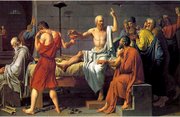
Plato was born around high class family in Athena on 427 B.CE, when he was young he acquainted with a famous philosopher Socrates who was became his teacher and friend. On 399 B.CE Socrates died by the government in his seventy years old, this verdict made Plato insufferable of democrat government. No longer after his teacher died, he left Athena and roves wander about ten to twelve years in unknown places.

On 387 B.CE he went back to Athena and built institution there, an Academy which alive about 900 years. He spent his 40 years in Athena, he taught, wrote the matters of philosophy, and he has a great student 'Aristotle' and Plato was sixty years old, so he was passed away in his seventy years.

Part two: the opus of Plato

Plato has written no less than thirty six books, which discussing about Politics, Ethics, Metaphysics and Theology. 'Republic' is one of his books that written about his ideal thought of social forms. He said the best form of government is aristocrat government, and a leader should be select by the collective agreement and the guardian should select his staffs according to their qualities.

Plato was the first philosopher who considered the women right in political aspect and social, he allowed women to have their chances in political roles. He said that children under responsibility of the state, they should learn any kind of sciences and especially his ideal understanding of the metaphysics.[8] Due to his opus, the idea of an ideal state has influenced broadly to western countries until today.

Chapter Three: The Ethics Philosophy of Plato

The definition of justice as "telling the truth and paying one's debt" is rejected, not only because it may sometimes be right to with hold the truth or not to return what one has borrowed, but because no lists of types of action could supply what Plato is demanding. What he wants to know is what it is about an action or class of actions which leads us to call it just. And he also rejected a definition of justice as "doing good to one's friends and harm to one's enemies".

Socrates does offer us a formula, that justice is that state of affairs in which everyone has regard to his own concerns, this is in it self the answer that was being sought.

Plato tried to show what justice is, first in the state and then in the soul. He outlines a state in which all basic needs are met. Three classes of citizen are required: artisans and labourers to produce the material needs of society; soldiers to defend the state and rulers to organize its social life. He believes that which is not certainly true is that one man is better to stick to one job. And the belief which is certainly false is that men are by nature divided up into men best suited for each of these functions. Plato believes on this point were powerfully resistant by his doctrine of the tripartite soul. The argument about the tripartite soul are independent of those for the tripartite state, but it is necessary for the doctrine of the tripartite state that at least something like the doctrine of the tripartite soul should be true.

The Plato points about desire is that a man can not simultaneously desire to do something and desire not to do it, in the same sense in which a man can not at the same time move in given direction and not move in that direction. He wants to illustrate a distinction between the parts which is the reason, a distinction which apply huge pressure upon some subsequent moral philosophy.

The division of the soul is not just between reason and appetite; there is also the spirited part, which is concerned neither with rational standards of behaviour nor with bodily desires, but with standards of honourable behaviour. And with anger and indignation. And justice of the state belongs not to the desires and wisdom of the superior few, nor to that class, nor to particular relationship between classes but to the society's functioning as a whole.

Justice in the soul is likewise a matter of each part of the soul performing its proper and allotted function. An individual is wise in virtue of reason ruling in him and brave in virtue of the spirited part playing its role. An individual is temperate if his inferior bodily appetites are ruled by his reason. And justice belongs to its total ordering. Moreover, the just man will rarely exist except in the just state, where at least some men, the future rulers are systematically educated in justice. But the just state can not possibly exist except where there are just men; Plato brings the ideal of the philosopher king.

The form of the good is not one among the other forms we think: they belong to the dominion of unchanging existence, the form of the good dwells beyond existence. So it is in the intellectual light given out by the form of the good we grasp the other forms, but we cannot contemplate the form of the good it self.

The ruler of the just state, in whom the rule of reason is present are rational in virtue of an education which has enabled them to apprehend the forms. In the just state the philosopher is king, only he can bring into being and maintain in being state in which justice is embodied both in the political arrangements and in the soul. It follows that the class division of the just society can, as Plato has earlier suggested, be maintained by educating some to be rulers, others to be auxiliaries, most to be ruled; the use of eugenic controls and selection methods is to insure that those fit for the education of rulers receive it.

Plato has three arguments that the just life is happier than the unjust one. The first is that the unjust man sets no curb upon his desires, and so his desires are without limit. But being limitless, his desires can never be satisfied and so he will always be discontented. The second argument is that only the philosopher is in position to contrast the pleasures of reason with those of limitless, appetite and sensuality, for he alone knows both sides. The third depends for part of what it seeks to prove upon the arguments about the forms.

Man can pursue pleasure only if I am pursuing identifiable goals and making choices between alternatives in terms of them. The man who can no longer make choices but passes on heedlessly and inevitably from one action to the next is not a possible normal human type, but rather a compulsive neurotic. [9]

Plato points out that justice is a relation among individuals, depending on social organization; and that in consequence it can be studied better as part of the structure of a community than as a quality of personal conduct.[10] He said that there are only three things worth while in this world: justice, beauty and truth; and perhaps none of them can be defined. And he said viewed that justice means the having and doing what is one's own. A just man is a man in just the right place, doing his best, and giving the full equivalent of what he receives. Justice is effective coordination, such as in individual, justice is the harmonious functioning of the elements in a man, every individual is a cosmos or a chaos of desires, emotions and ideas.[11]

References

Concise Oxford English Dictionary, Eleventh Edition

Durant, Will, The story of philosophy, Simon & Schuster, New York, 1961,

Hart, Michael H., Seratus Tokoh yang Paling Berpengaruh dalam Sejarah translated by Mahbub Djunaidi, Dunia Pustaka Jaya, Jakarta, 1982.

Ilyas, Yunahar, Kuliah Akhlaq, LPPI, Indonesia, 2005

Ismail, Mansyavi Abd Rahman, Fi Taarikh al-Fikri al-Falsafi, Daar al-Tsaqafah al-'Arabiah, Cairo, 1999

MacIntyre, Alasdair, A Short History of Ethics, Routledge, London, 2000

[1] Concise Oxford English Dictionary, Eleventh Edition. "Ethic".

[2] Ibid, "Ethos".

[3] Ilyas, Yunahar, Kuliah Akhlaq, LPPI, Indonesia, 2005, p: 1

[4] MacIntyre, Alasdair, A Short History of Ethics, Routledge, London, 2000, P : 84

[5] Ibid, P: 21

[6] Ilyas, Yunahar. Op. Cit., p: 2

[7] Ismail, Mansyavi Abd Rahman, Fi Taarikh al-Fikri al-Falsafi, Daar al-Tsaqafah al-'Arabiah, Cairo, 1999, P: 121

[8] Hart, Michael H. Seratus Tokoh yang Paling Berpengaruh dalam Sejarah translated by Mahbub Djunaidi, Dunia Pustaka Jaya, Jakarta, 1982. No: 40
[9] MacIntyre, Alasdair, Op. Cit., P: 33-47

[10] Durant, Will, The story of philosophy, Simon & Schuster, New York, 1961, p: 18

[11] Ibid, p: 33

why should women be aware of knowledge

INTRODUCTION

'Women', they already existed from the beginning, there are many stages of women's life since to be a companion of Adam up to number civilizations in ancient period, the coming of Islam and now, what the people called by modern era. So many different how the women survive and develop from time to time in several of fields, especially what I want to point here is in the educational aspect, it contents of any knowledge and sciences.

Muslim women in science have become leaders in their fields nowadays, receiving awards, earning patents and making contribution that further man's knowledge of the world. That will be figures of the women Muslims today, how their sisters can achieve that goal, then to push all the Muslims ummah for attain all knowledge as possible.

My topic in this project is 'Why should women be aware of knowledge?', that I divided into some chapters and parts are:

Women in history and today's life

  1. The Ancient Women
  2. The Women in Period of Islam
  3. Women in Today's Life

Women and Education

  • Education, Philosophy and Science
  • Women and Knowledge

Islamic perspectives of women

  • The Status of Women
  • The Equality of Men and Women
  • Woman's Place in Society

My method in this project is collecting all sources of different women story in various periods of life and civilization, describing definition of education and philosophy and the relation between them, defining science and its importance for women and examples of women scientist figures. Finally I explain the ideal perspective of women is in the Islamic views, here I mention the status of women, their equality with men, and their position in society.

By, Alfina Hidayah

CHAPTER ONE: WOMEN IN HISTORY AND TODAY'S LIFE

History had told us the life enlargement of human beings from its beginning. And woman is part of this long story and she already exists to company, submission, and helps a man. Indeed woman also give a birth of man's children and makes them grow up. But again, where does the history tell us about woman? How is life keep her alive? Why does world forget them through long history?

Part One: The Ancient Women

According to some religions, Hawa or Eden is to be blamed for the first mistake that Adam sent to earth, the Christians and the Jews believed that. Come foreword in the history of ancient Egypt, Babylonians, Persians, India and China civilizations; we will find that women in their society were very bad conditions. They treated woman as a slave, woman should finish her life when her husband is died, to be buried or burnt alive together with her husband's corpse. Another phenomenon in history that woman became religious offering and to be sacrificed for realm worshiped or devas.[1]

In Ancient Greek and Roman, the existence of woman considered to be the second position of human beings, half man etc. Aristotle view about woman is that "A woman was an un-finished man…"[2] Another story that an ancient Greek man were repressed and inhibited their women in palace and they made low class woman for sale, then anyone can buy and own woman as other property. The husband can do everything to his wife, selling, torturing, expelling or even he can kill her.

What happened in Ancient Arab before Islam is the same as other places, no respectable level for women. The woman was a slave and chattel, and even they killed their daughters.[3] What terrible thing happened to women for thousands years?

Part Two: The Women in Period of Islam

The places of women rise up when Islam came as the merciful teaching for whole universe, because Islam came as a perfect religion and civilization. There is no marginalization of sex in Islam, whether man and woman both are equal according to their functions. In the time of Rasulullah Salallahu 'Alaihi Wassalam there was kind of freedom for women, they were allowed to be active out of their homes, learning, teaching, attending Khutbah of Prophet Salallahu 'Alaihi Wassalam in the mosque and also they participate in jihad, giving an oath and Hijrah.

By this, there are many female figures of Islam, such as the wives ra of Rasulullah Salallahu 'Alaihi Wassalam, His daughters ra, another figures are Al-Syifa (a first female teacher), Rufaida (a founder of hospital and Red Cross), Zubaida (wife of Harun al-Rasyid), Qohromanah (first female judge), Laela Katun (a first woman participated in Crusade war), Ummu Khalil (a female master of Egypt), Qoro Fatima Khanum (a leader of war), etc.[4]

Part Three: Women in Today's Life

According to modern thinking, giving equal status to women meant bringing them out of their homes and standing them face to face with men in all facets of life without any regard for the practical and moral problems which might arise. The modern man imagines that his feminine counterpart has in actuality been accorded a superior position. But what actually happen is that the status of women is the same as it was in ancient times, there still being mutually exclusive divisions into male and female spheres, with the corresponding attitudes still very much in evidence. Fourteen hundred years ago Islam launches a much needed woman's lib movement, whose purpose to free women from artificial curbs and to give them position which any normal human beings should have in society, without any sacrifice of femininity or traditional values, without creating any problems in society. In contrary with the whole liberation movement of the west has been swamped in a welter of emotion, creating a number of social problems.[5]

CHAPTER TWO:WOMEN AND EDUCATION

Part One: Education, Philosophy and Science

'Education' has been derived from the Latin words Educare, Educatum or Educere. Means to train, to bring up and to nourish. The former implies that education is something external; to be imposed or put in from outside, the latter indicates growth from within. Aristotle definition as a process necessary for the creation of a sound mind, to train body, mind and soul.

There are many people have different ideas of education aims, are: the conservative or cultural aim, the progressive aim, education for citizenship, Social efficiency as an aim, vocational aim, knowledge as an aim, personality development as an aim, etc. however formal and informal education are not contradictory but rather they are supplementary to each other.

Philosophy is the pursuit of wisdom, the study of realities and general principles. It is concerned with a search for the eternal truth. It is said that every teacher has a philosophy of education, whether he is aware of it or not. It is relation between philosophy and education by saying "Philosophy and education are like sides of coin, the former is the contemplative side, while the latter is the active side'.

Sir John Adam says: Education is the dynamic side of philosophy. Philosophy and education are interdependent, philosophy depends upon education for the formulation of aims and objectives and education depends upon philosophy for its guidance.

Educational philosophy is a branch of general philosophy, education to a large extent, is dependent upon educational philosophy. Philosophy formulates the aims and objectives of education which in turn, influence the practice, the subjects of study and the methods of teaching. The educational philosophy draws its data from a wide variety of sources it starts from the humble data of common sense and goes into philosophical thinking of great concentration and of high standard. It draws from science, history and traditions.[6]

Whereas science, it means to know, there are three main ideas of science: (1) science is systematized body of knowledge, (2) science is a way of investigating, (3) and science is a way of thinking. Science is a way of thinking, a person with a scientific attitude will have the following characteristics: Open mind ness, objectivity, freedom from superstitions, belief in cause effect relationship, accuracy and truthfulness in reporting observations, methodical way of solving a problem, up to datedness, respect for other people opinion, though may not be agreeable, ability to distinguish between scientific evidence and scientific proof, ability to discern between fact and fiction.

Science has brought about change in our way of thinking, attitudes, out look and our life style. As such the average span of human life has been doubled by bringing about a change in health, medicine, and sanitation. There is revolutionary change in communications transportations, agriculture, engineering, power, etc. the impact of science is evident in agriculture, health, modern civilization, democracy, etc.

Science education is essential as it is of immense value in the student's individual life and his life in society. In the present era of science, people are pursuit of scientific knowledge necessitated by the space age and explosion in knowledge in information technology. Science education has taken an important place because it has influential values in intellectual, vocational, aesthetic, practical, psychological, moral, and cultural and adjustment arena of an individual.[7]

Part Two: Women and Knowledge

There are some motives which obliged women to seek knowledge, as became Muslim according to the Islamic Shari'ah, Maulana Wahiduddin Khan ever said in his book about some reasons why women should be aware of knowledge, a number of them are:

  1. Woman is source of goodness: some verses in Qur'an and some traditions which elaborate this point: "live with them on a footing of kindness and equity. If you take a dislike to them, it may well be that you dislike a thing which God has meant for your own abundant good." This verse draws our attention to the fact that nothing is perfect in this world and that apparent imperfection may conceal some virtue. If in certain respects a woman is imperfect, there will be other respects in which she is perfect: it is her plus points, on which attention should be focused.
  2. Freedom of expression: there was a common woman has criticized the ruler of an empire of Umar ra, and the latter withdrawing his words. The right of absolute freedom of expression as we find in this incident, is a clear indication that woman has been granted her full rights in Islamic society.
  3. Woman as a source of knowledge: in the first era of Islam, academic activity related mostly to work on the Hadist and athar. We will find in this age that a number of the prophet's companions were women, and they contributed in large measure to the narration and preservation of the traditions of the prophet. 'Aishah, herself handed down to posterity a substantial proportion of what comprises the vast whole of Islamic knowledge.
  4. In the field of action: at the period of Islam, women worked not only in their homes but outside as well, this was because their men folk were so preoccupied with preaching Islam, and the household responsibility was left to the women then to deal with both internal and external duties. They even tended the animals, did the farming and worked in the orchards, etc.[8]

From these reasons we know that Allah has gave women an extraordinary power to do in every fields of life, we can conclude that there is no an exception to women can not learn knowledge when it is possible. Especially in modern world today, for every one should own knowledge, at least it will be benefit for their selves. Allah Subhanahu Wa Ta'ala said: "…Are those who know equal to those who know not? …" (Az-Zumar: 9).[9]

The role of family and society are very essential to encourage women in seeking knowledge, whether parents or husband. But unfortunately what happened today is not exactly the same as Prophet taught in the beginning of Islam, because through history we know there are kind of freedom for women in study and even for jobs, but nowadays there are many men in family are very restricted to their women, and in very bad condition that sometimes men use the words of religion to restrict their women. Then, in the reaction we find a number of problems happened in society; such as the thought of feminism in Muslim women, etc.

However, formal and informal educations are not contradictory but rather they are supplementary to each other. If it is possible for women to achieve a higher education, so why not? There are a large number of women can not attain their education due to many problems, then if woman has not possess any problems and difficulties so it will be better to complete her education as high as possible because no prohibition in religion for seeking knowledge but orders it.

The problems and difficulties that sometimes interfere with education are: family problems, financial problems, chance and opportunities, self interest problem, and personal problems such as indolent or laziness etc.

The famous women Muslims Scientists today, are: Professor Dr. Bina Shaheen Siddiqui, Dr. Siddiqui has made significant contributions to medicine and agriculture through her study and classification of indigenous plant materials.

Sameena Shah : Recently at the international Workshop on Machine Learning in Canada, Samira Shah, presented an innovative algorithm in computerized cognitive leaning that she and a team of colleagues developed at IIT Delhi, India.

Professor Samira Ibrahim Islam: Professor Islam was nominated as a distinguished Scientist of the World for the Year 2000 by UNESCO.[10]

CHAPTER THREE: ISLAMIC PERSPECTIVES OF WOMEN

Islam is the religion of the Muslims, a monotheistic faith regarded as revealed through Muhammad Salallahu 'Alaihi Wassalam as the prophet of Allah.[11] Islam has the basic belief that "There is no God but Allah; Muhammad is the messenger of Allah", Allah is the sole and sovereign ruler of the universe, and He sent a number of messengers to the human beings for preaching. The last prophet in Islam was Muhammad Salallahu 'Alaihi Wassalam who brought the Muslims from the darkness to the lightness by the holy book of al-Qur'an which guides the people to the right path.[12]

Part One: The Status of Women

The obligation of women in Islam is the same as men's duty it is worshiping Allah Subhanahu Wa Ta'ala, and the human being's worship is the first obligation in Islam, there is no different between male and female in worship of Allah Subhanahu Wa Ta'ala [13] Islam views of women whether single or married they have their own rights, the right to own and order their properties and earnings without any guardianship over her property and earnings without any guardianship over her. She has the right to buy and sell, give gifts and charity. And may spend her money as she pleases. A marriage dowry is given by the groom to the bride for her own personal use and she keeps her own family name rather than taking her husband's. and Islam encourages the husband to treat his wife well, as the prophet said: "The best among you are those who are best to their wives".[14]

The status of women is also discussed in Islam since the arising of this religion by its great prophet Muhammad Salallahu 'Alaihi Wassalam. Here I will mention how Islam gives the status for women which are differ from other religions such as Judaism and Christianity etc. Some of these importances are:

  1. Woman is not responsible for the first fault of human beings but Adam who was responsible for that.
  2. Mother is most respectable than father, as mentioned in al-Qur'an surah al-Luqmaan: 14; (And We have enjoined on man (to be dutiful and good) to his parents. His mother bore him in weakness and hardship upon weakness and hardship, and his weaning is in two years. Give thanks to Me and to your parents. Unto Me is the final destination).[15] And other proofs had mentioned in many verses of al-Qur'an and the prophetic traditions.
  3. Welcoming woman since their births, because whether male or female both are grants from Allah Subhanahu Wa Ta'ala and there is no different between them. And Allah Subhanahu Wa Ta'ala has told us through the teaching of Muhammad Salallahu 'Alaihi Wassalam.
  4. The woman has rights in education and teaching.
  5. The woman is master of responsible perfectly
  6. Management of the Muslim's house
  7. Woman is mother of kholiqoh
  8. Woman right in agreement of Nikaah (Akdun Nikah), etc.[16]

    Part two: the Equality of Men and Women

Equality is term which is hard to define, according to the Concise Oxford English Dictionary the meaning of equality is: "The state of being equal". There is a sense in which all human beings are equal to each other, but actually we find that there is no two human beings are really equal in all aspects. There are some differences of tastes, temperaments, faculties, power and outlook, all of which can not be applied to differences of environment or background.[17]

The women of Arabia have a very poor condition and low positions in society before Islam appear there. The women treated as slaves and chattel that whenever a man died, the chattel can be inherited to his son like movable property. Allah said in Holy al-Qur'an: "They are apparel for you and you are apparel for them". That men and women protect each other from sin and dishonour or it may mean that women lends dignity and adds beauty to their man. "They have rights similar to those against them in a just manner".

Female children should be treated exactly in the same manner as male issues, according to report of Ibn Abbas, the Prophet's cousin, he is said to have declared: "If a daughter is born to a man and he brings her up affectionaly, shows her no disrespect and treats her in the same manner as he treats his sons, the Lord will reward him with paradise".

In Modern period, Dr Alexi's Carrel he is a French noble prize winner, says in his book Man the Unknown: "the differences existing between man and women are of a mere fundamental nature".[18] The Quranic verse: "And do not covet that by which Allah has made some of you excel others, men should have the benefit of what they earn and women shall have the benefit of what they earn."[19]

Part Three: Woman's Place in Society

In Eighteenth Century there was a great social and intellectual unrest in Europe. Powerful voices were raised on behalf of the rights of the female sex which had long suffered from innumerable legal and social disabilities. Freedom and equality of the sexes became accepted principles with the new social reformers. And France, where first made an organized drive to popularise the ideal of sex equality.[20] But the Shariah binds sons to take care of their parents, grand parents, and other near relations.[21] Even Islam taught every husband to treat kindly their wives, Islam also has respectable place of women in society, that’s why there is no restriction for them in seeking knowledge.

CONCLUSION

Seeking knowledge is one of the most rewarding ways to connect to Al-Alim (The All Knowing) besides prayer. The believing faithful hold a deep love for Allah in their hearts. Perhaps it is this deep love that inspires believing men and women to strain and reach with their minds, through scientific learning in order to bring themselves closer to the One to whom they are so thankful.
A woman is a part of human beings that obliged to seek knowledge as possible. Because there is no prohibition in Islam that women can not learn knowledge, through formal or informal education is not the matter, the question is why women should not learn? While the Quran and Hadist requested to seek knowledge, so why not???

  1. Hidayah, Alfina, Tentang Wanita (in Dedikasi Bulletin), Islamabad, April Edition, 2008, p: 22
  2. Gaarder, Jostein, Sophie's World, Berkley Books, New York. 1996, P: 116
  3. Ibid
  4. Ibid, pg: 23
  5. Khan. Maulana Wahiduddin, Woman between Islam and Western Society, Maktaba al-Risala, New York, 1997, P: 48
  6. Khalid, Tanvir, Education an Introduction to Educational Philosophy and History, National Book Foundation, Islamabad, 2000, p: 3-20
  7. Joshi, S.R., Teaching of Science, Kul Bushan Nangia, New Delhi, 2005, p: 1-9
  8. Khan. Maulana Wahiduddin, Op. Cit.,. P: 141-155
  9. Q.S Az-Zumar: 9. Interpretation of the Meanings of the Noble Qur'an in the English Language interpreted by Muhammad Taqi-ud-Din Al Hilali and Muhammad Muhsin Khan, Darussalam, Riyadh, 2001, p: 910
  10. See: 'Islam' (in Concise Oxford English Dictionary), Eleventh Edition.
  11. See: Hopfe, Lewis M., Religions of the World, Macmillan, New York, 1987, p: 388
  12. Al-Buti, Muhammad Said Ramadan, Al-Mar'ah Baina Tughyani al-Nidzam al-Gharbi wa Latho'ifi al-Tasyri'i al-Rabbani, Daar al Fikri al-Mu'asir, Beirut, 1996, p: 1-2
  13. See: What is the status of women (in a Brief Illustrated Guide to Understanding Islam, I.A Ibrahim), Darussalam, Houston, 1997, pg: 63
  14. Q.S. Luqman: 14, Interpretation of the Meanings of the Noble Qur'an in the English Language interpreted by Muhammad Taqi-ud-Din Al Hilali and Muhammad Muhsin Khan. Darussalam, Riyadh, 2001, p: 815-816
  15. Al-Wahab, Ahmad Abd, Ta'addud Nisaa' al-Anbiya' wa Makanaatu al-Mar'ah fi al-Yahudiyah wa al Masihiyah wa al-Islam, Maktabatu Auhabah, Cairo, 1989, p: 258-290
  16. Siddiqi, Mohammad Mazheruddin, Women in Islam, Institute of Islamic Culture, Lahore, 1996,
  17. p: 15
  18. Ibid, pg: 16-24
  19. Ibid, pg: 34
  20. Ibid, pg: 2-3
  21. Ahmad, Anis. Women and Social Justice an Islamic Paradigm, Institute of Policy Studies and the Islamic Foundation, Islamabad, 1996, p: 17